What are your credentials?

Just then a man came up to Jesus and asked, “Teacher, what good thing must I do to get eternal life?” Jesus replied. …..If you want to enter life, keep the commandments.”
 “All these I have kept,” the young man said. “What do I still lack?” Jesus answered, “If you want to be perfect, go, sell your possessions and give to the poor, and you will have treasure in heaven. Then come, follow me.” When the young man heard this, he went away sad, because he had great wealth. (Matthew19:16-22)

Do you remember when you first went to Motor Vehicles to replace your old license and get a super-duper TSA-approved photo ID license? There was a list of documents that you needed to present to get it.  I was sure I had brought enough of them along. But then the DMV worker said, “Sorry, these credentials are insufficient.” I asked, “What do I still lack?” After hearing what I was missing, I went away sad. I had to go home and start all over again.

Now let’s talk about the eternal credentials we need.

Jesus spoke today’s verses right after he talked with the rich young ruler. This ruler presented his credentials to Jesus: He viewed himself as a fine upstanding young man, a good and moral person. He thought he had all his credentials in order, and Jesus would give him a hearty welcome into eternal life.  But he walked away when Jesus told him to sell his possessions. Being good and moral were not sufficient credentials.

Jesus knew that this young man’s issue was money, but we can extend that and see that really, Jesus is talking about anything that keeps us from loving God with all our heart and soul and mind. And we all have obstacles that prevent us from doing that.

Indeed, Jesus tells us that we are Klingons. We might cling on to material goods. Or cling on to a phony idea of what the good life is. We need to stop being Klingons. For myself, what I was clinging onto was how much smarter I was than those cretins who believed the Bible.

But how can we possibly stop clinging on? The disciples had the same question. These astonished guys asked “Who then can be saved?”  Then, Jesus looked at them and said, “With man this is impossible, but with God all things are possible.” (Matthew 19:25-26)

It is God who gives us the genuine credentials.  First, by grace, he has drawn us in to believe and to be adopted into Jesus’ family.  As this happened to me, I discovered that people who believed the Bible were not cretins after all! Next, grace gives us the heart to stop clinging on to substitutes for Jesus. This allows us to have even more of him—-I know this process is far from done but I am thankful it is continuing!

Light in the Darkest Night

You have taken from me friend and neighbor—
 darkness is my closest friend (Psalm 88:18)

Did you know that there is only one Psalm that does not have a happy ending ? It’s Psalm 88.

The sad ending in verse 18 is why this Psalm is often called the darkest in the whole Psalter.

But I want to show you that the message of this Psalm is not bleak despair.  Looking at it closely, there is more hope than you might notice at first glance.

If the Psalm were totally pessimistic then the photo below would be totally black. But it’s not. You see the bare beginnings of light and daybreak. So, what are the signs of hope in the Psalm?

First hint of light over a foreboding forest

Right off in the first verse, the Psalmist acknowledges God as the God who saves: Lord, you are the God who saves me; day and night I cry out to you.

He keeps seeking God’s face throughout in prayer:

May my prayer come before you;
 turn your ear to my cry. (Psalm 88:2)
But I cry to you for help, LORD;
 in the morning my prayer comes before you. (Psalm 88:13)

What if the  Psalmist had said, “I give up. I’m not going to bother to pray anymore”? Then you would have a bleak Psalm indeed! But that is not what the Psalmist does ; he does not give up despite feeling and experiencing a desperate situation.

Even when the Psalmist asks, in verse 14, Why, Lord, do you reject me and hide your face from me? you sense that he has not given up—in his darkest despair he is still talking to God! And an implied hope is that this is only a temporary feeling.

When we feel that  God is hiding his face from us when we are faced with tragedy or disappointment, we can take heart that as the Psalmist cries out, he is not compelled to pretty up his laments or pretend to be more cheery than he is. That’s a good example for us—we don’t need to pretend to feel that we are closer to God or more sure about God’s answer than we really are.

It’s unclear what the exact source of the grief, trouble and feeling near death is for the Psalmist.

I think that’s a deliberate vagueness that allows us to fit ourselves into the Psalm. We can fill in the blank with our own discouragement. But also, we fill the blank in with our own persistence in calling out to the Lord and praying to the Lord. We don’t give up.

Mind Boggling God

What do you think about the attributes of God? Some people think they are abstract and overly theological. But today I want to show you how God’s attributes reveal that he is a mind-boggling God: He overwhelms our thoughts and emotions.

attributes

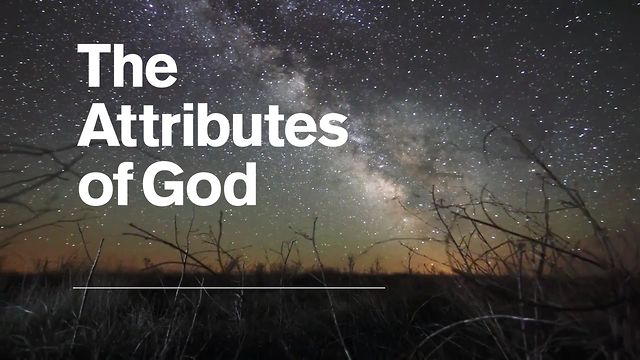
Today’s photo makes me think of the most majestic features of God. The creation of the universe!  Innumerable galaxies, billions of stars. And the book of Psalms is a great place to see the attributes of God come alive.  In Psalms, we see God’s goodness, might, lovingkindness, and even his anger.

In Psalm 86, we first get a taste of the awesome side of God:

For you are great and do marvelous deeds;
     you alone are God. (Psalm 86:10)

Later in the Psalm, we get a taste of how personally  his attributes touch us.

 But you, Lord, are a compassionate and gracious God,
     slow to anger, abounding in love and faithfulness. (Psalm 86:15)

I do not claim that I have the following experience every time I pray, not by a long shot:

But, during this recent prayer time, I started by admiring God as the almighty creator of the universe, so transcendent that he is even above time. And then that marveling segued to experiencing a God who has condescended to walk with me, I got a most intense awareness that Almighty God was personally living with me and walking with me in each thought or feeling that I had as I prayed……this sense of entering personal communion with the Lord in such a deep way lasted for a few minutes.

This God who is both majestic and personal is the same God who sent his Son to die for us and give us new life. As we study God’s attributes and begin to experience them, we enter what Jesus said about getting to worship God in Spirit and in truth.  God’s attributes are not dry abstractions, but rather engines that get us more fired up for experiencing him and his love and passing it on.

Facing Tests and Trials

As Christians, we often undergo trials and tests. Today I’d like to give an overview of Trials and Testing throughout the Bible.

These tests call us to humble ourselves before God and are meant to grow us. But there’s a problem: We (me too!) often switch it around and test God.

Early in Scripture we learn about a huge test failure on a test: The Fall.   Adam and Eve failed the test big time. See Genesis 2:15-17, 3:1-6, 3:22-24 to review what happened. The bottom line: Adam and Eve thought they were smarter than God.

Centuries later, after escaping from Egypt, Israel went into the wilderness —- and failed the test. A typical example of this failure is Exodus 17:7:  And he [Moses] called the name of the place Massah[testing]and Meribah [quarreling], because of the quarreling of the people of Israel, and because they tested the Lord by saying, “Is the Lord among us or not?” To complain against God is to test him and to look down on him. We hold God in contempt.

Jesus began his ministry in a place familiar to the Israelites:   in the wilderness. Good news for us:  Unlike the Israelites he passed his wilderness test! See Matthew 3:16-4:2 and 4:5-7 for how Jesus had victory in this.

The fourth test is the one faced by us Christians. In James 1:2-4 we learn: “Consider it pure joy, my brothers and sisters, whenever you face trials of many kinds, because you know that the testing of your faith produces perseverance.  Let perseverance finish its work so that you may be mature and complete, not lacking anything. “And James 5:19-20 tells us even more about this.

Through trials and testing, what is our goal? James is confident that when we have trials, and as we seek prayer and encouragement from the body of Christ, we will grow to be able to pass these tests.  We can then share in Paul’s joyful declaration in Ephesians 3:20-21:

Now to him who is able to do immeasurably more than all we ask or imagine, according to his power that is at work within us, to him be glory in the church and in Christ Jesus throughout all generations, for ever and ever! Amen.”

Here are some questions to help you work through the implications of today’s teaching:

  1. When are you most likely to think that you are smarter than God?
  2. When are you most likely to complain against God?
  3. When are you most likely to fail the test? (i.e. hungry, not enough sleep, too busy to study scripture, etc.)
  4. How do you feel and react when you have failed the test? Not just how you are supposed to react, but how you actually react?  
  5. What should happen when we fail a trial or test? See 1 John 2:1-2
  6. Does a trial test our ability to do it OR does it test our faith in what the blood of Christ accomplished?
  7. In what specific area of testing would you like prayer for growth?

My idea for writing this post was inspired by Ed Welch’s teaching in the Human Personality Online Course at CCEF.

http://www.ccef.org/courses/human-personality

I profited from and recommend taking the CCEF online courses. Your growth in Christ and the ability to minister to others will make it well worth the effort.