Category: Theology

A Post From Leviticus??

It may surprise you to see that today’s devotion starts from the book of Leviticus.

Leviticus is often viewed as a book that’s full of puzzling and outdated rules, but amazingly it can spur our passion to follow our Lord God today. I’ll warm up by giving you one command from Leviticus that is appealing for people of a certain age……….

Stand up in the presence of the aged, show respect for the elderly and revere your God. I am the Lord.  (Leviticus 19:32)   If you are old enough for young people to stand up for you, this is a nice command. (Of course on a more serious note, think how our culture venerates youth and discriminates against talented older workers.)

But now on to today’s main point. Many ceremonies described in Leviticus seem quite strange to our 21st century eyes. But there’s one ceremony that points straight to the heart of what Christians believe. In talking to the people of Israel, God says: On the tenth day of the seventh month atonement will be made for you, to cleanse you…. from all your sins. The …. high priest is to make atonement. (Leviticus 16:29,30,32)

And in verse 34 God says: “This is to be a lasting ordinance for you: Atonement is to be made once a year for all the sins of the Israelites.”

Can you imagine having your sins pile up for a full year……and then having an annual cleanup? It’s good to get rid of sin but still …. something about this remedy is defective.   

Speaking of defective, I vividly remember one episode on the original Star Trek. It’s called The Changeling.Here the Enterprise crew meta space robot called Nomad. Nomad approached and then probed some crew members, and was not pleased with what it found. Indeed, in its robotic voice, Nomad would exclaim: “This unit is defective,” and the consequences were rather dire…. say goodbye to that crew member.

But now, let’s hear what Leviticus says about defective units.  Here, someone is not allowed to approach God’s altar: 

  No man who has any defect may come near; he must not come near to offer the food of his God. …. because of his defect, he must not go near the curtain or approach the altar, and so desecrate my sanctuary. I am the LORD (Leviticus 21:18,21,23)

This passage focuses on people with physical defects like crushed testicles, but aren’t we all defective when we stand on our own before the Lord? Yes, but are we hopeless?

No, we have hope because God chose to come in the flesh. Born a baby, Jesus grew up to become the man who lived the one and only perfect Christian life. He then was crucified to become the perfect, once for all sacrifice for our sin.

Jesus’ death and resurrection tore the curtain before God’s altar in the temple so that we can enter God’s presence. And now, free from sin, God no longer views us as defective units! We are presented “without defect” because of what Christ has done……….. What a joy!

Now to him that is able to keep you from falling, and make you appear in his glorious presence, without defect, and full of joy: (Jude 24)

Once we are freed from defect, what happens next? Do we just sit back and chill out? I don’t think so. See my next post.

Another Bogus Bill

The Lord said to Moses and Aaron, “When you enter the land of Canaan, which I am giving you as your possession, and I put a spreading mold in a house in that land, the owner of the house must go and tell the priest, ‘I have seen something that looks like a defiling mold in my house.’ (Leviticus 14:33-35)

Putting a mold in a house? What is God up to? Is he is doing something evil?

We often hear “God is not the author of evil” as a blanket statement and ironclad rule. Today, let’s examine that.

We do know that Satan had to get God’s permission to afflict Job. So if the devil needs to ask permission, then obviously God could say “No.”  But then, why did God ever say “Yes”? Because doesn’t saying yes make God responsible for the evil?

Some try to solve this problem by backing off a bit and saying God “allows” evil…But that begs some additional questions ….

For example, does God “allow” stuff that is not part of his plan? If yes, then he is not omnipotent. But if no, then it means that evil is part of his plan. But if that’s true then, once again, it looks like God is the author of evil.

Here’s how I try to sort that out: God does ordain evil which can temporarily seem nothing but bad. But the key word is temporary. Because from a long term or eternal perspective God always uses that temporary evil to achieve something good in his long run plans. This means that God never ordains evil whose end result remains evil with nothing good coming out of it.

So God ordains evil as a passing step towards what will bring him even greater glory.

Now I can try to explain why God put the mold in the house. Because verse 35 says that the owner of the house must go and tell the priest, ‘I have seen something that looks like a defiling mold in my house.’ So, God has given a test for the owner —- he is tempted to cover it up because now the house is required to be torn down if the mold persists. Does the owner respond in obedience and report the mold?  Or disobey and keep quiet to nervously hold onto his property?

Now, an example from my own life. It’s when I receive a bill with a bogus charge on it. I have whined and whined when that happens. I am not proud of my history of being all ticked off about it and then yelling on the phone when the help desk refused to fix the error.

I had said I would never yell again, ever. But a few months ago it happened again! Why did I blow it? It’s because I did not see that somehow God did ordain it – allowing the phony charge to test me and to grow me. After all, God could have stopped the bill but he did not.

Reflecting on that, now I know ahead of time that I will again get a bogus bill and again get a help desk person who refuses to fix it. Will I yell or will I say OK Lord I know you have sent this evil as a test and this time I will pass the test to your glory?

Sure, getting fake charges on a bill is annoying. But just think of the biggest example of fake charges in history. God ordained that wicked people to crucify his only Son on fake charges!  But God ordained this wickedness to bring the greatest good in the history of the planet— a redeemed people called Christians who have eternal life and bring God’s good news to the world! And when he ordains that I get fake charges, God means it to shape me into being a better ambassador of his good news.

“Must I ?”

piper

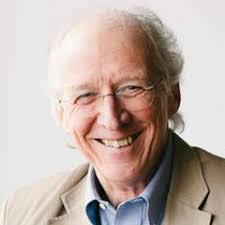
You may be familiar with the teaching and writing of John Piper. I last saw him in person 10 years ago at the Gospel Coalition conference in Chicago.  Recently  I caught him on a live stream from  the Gospel Coalition conference in Indianapolis.

Well, after 10 years, Pastor Piper, now 73, has not lost any of his zeal.

He spoke of passion week and what must happen to Jesus at the end. Here’s a scripture that was central in his talk.

And he said, “The Son of Man must suffer many things and be rejected by the elders, the chief priests and the teachers of the law, and he must be killed and on the third day be raised to life.”( Luke 9:22)

Hearing Piper’s talk I was struck by all the musts, and how all the events that happened to Jesus during  passion week were foreordained as part of God’s plan. So even though  Jesus’ executioners meant it for evil, God used the crucifixion for the good purpose of saving a people who benefit from Christ’s death  and resurrection by getting eternal life.

Piper’s talk inspired me to reflect on our own lives and whether things must happen.

We know that God is totally in control of everything, so that in our lives there is nothing that “just happens” to occur. That really means that God says everything in our lives had to happen.  Stunningly, this even applies to the most negative stuff that has ever happened to us,  including nasty ways of being mistreated, beaten up, slandered, and unjustly accused.

If we don’t see God’s hand in it, reflecting on the negative things that have happened to us leads to a whining, bitter or fearful attitude. But just think : if we believe that God is really sovereign Lord, then we must accept that he could have stopped any of it — but somehow, for his own good purposes, not always clear to us, he allowed all of it.

The events of passion week, of course, had to happen because they were part of God’s plan for bringing salvation and showing his glory throughout the earth on a grand scale.

But the things that happen in our own lives help execute God’s will on a smaller scale…our “little” lives are meant to show his glory, too …so whatever misfortunes that happen  are fully  under God’s control. I know this isn’t always easy to see and accept but it’s a wonderful antidote to bitterness.

If the River Dries Up, What Can We Depend On ?

low danube     resized begg

This past August we went on a cruise on the Danube river, led by Pastor Alistair Begg.

We saw many wonderful sights in Germany, Austria, and Hungary but were faced with a major issue: due to drought in central Europe, the river was too shallow. Because of this, our Viking cruise ship was in danger of running aground.

At two different locations, one in Germany and one in Austria, the water was so shallow that we had to leave the boat, take a bus bypass around the shallow area,  and then embark on a different, almost identical ship downstream. It was a Bizarro world experience — we got the same stateroom number and room type, but tiny details might be different—for example, the bathroom sink might be black instead of white, or the electrical sockets might be different.

We did finally get to where we were supposed to go —Budapest —  but definitely not by the route that had been planned.

Doesn’t something similar happen in our Christian lives ? We embark on our plans and get detoured. Sometimes our lives seem like a bizarre, inexplicable variant of what we originally expected.

When such detours occur, do things “just happen” to go the wrong way ? Are the bypasses in our life some kind of chance or accident ? No, God is sovereign over each of those twists and turns.

But, does God’s lordship mean we are responsible for nothing ? Not at all. When a detour happens that seems out of our control, at least we are responsible for our attitude. When the spit hits the fan,  we can choose whether to dwell in contentment  or to whine. On our river trip, we had an example of that choice : did all the extra packing and unpacking lead to grumbling ?

Anyone who depends on the Danube’s water level faces conditions which are always fluctuating. But Jesus never changes.

 Jesus Christ is the same yesterday and today and forever. (Hebrews 13:8)

What Jesus supplies does not waver or vary and is totally dependable.

Yes, we can rely on him. What a wonderful lifesaving truth to cling to during the unexpected  detours  in our lives!