Category: Devotions

Righteous and Devout?

chrchL

Now there was a man in Jerusalem called Simeon, who was righteous and devout. He was waiting for the consolation of Israel, and the Holy Spirit was on him. (Luke 2:25)

In this Nativity passage, Simeon is eagerly anticipating the birth of Jesus. As I read this passage, a question came to mind: what did it mean that Simeon was called righteous and devout?

For a long time, I think, I viewed that description, at best, as meaning someone who exists on a heavenly plane and is just so far above lots of the stuff that bugs us.

And at worst, it would be someone just like the Church Lady on Saturday Night Live pictured above. Someone who is just a little bit holier than everyone and quite the judge of everybody and who is just so special!

But let’s take a fresh look at what being righteous and devout might mean:

  • Someone who is genuinely humble and instead of being self-righteous, is quick to confess their sin.
  • Someone who, instead of being holier than everyone, laughs a lot, enjoys life to the fullest, and does not take themselves too seriously.
  • Someone who is heading to Christian maturity, is Spirit-filled and has the fruits of the Spirit.

But the fruit of the Spirit is love, joy, peace, patience, kindness, goodness, faithfulness, gentleness, self-control; against such things there is no law. (Galatians 5:22-23)

In Luke, Simeon was looking forward to the consolation of Israel (Jesus) — and don’t we look forward to when Jesus returns and sets up his kingdom? Didn’t that hope affect Simeon’s whole life? Shouldn’t it affect ours?

Simeon had a dose of the Holy Spirit that was very rare in the Old Testament. But Jesus has given us the Holy Spirit to dwell in us every day. Now we get a daily taste of what righteous and devout really means…and that joyful life is nothing like being the Church Lady!

Dare to Be a Daniel?

lion-yawn

I recently spent 2 weeks reading the book of Daniel in my personal devotions.

Daniel seems to be an unblemished Bible hero, meaning that none of his specific sins or character weaknesses are ever mentioned. At first, I thought this made the character of Daniel seem rather unreal to me. I mean, I like how the Old Testament has so many guys who are portrayed as real, warts and all. Think of David with his adultery, Jacob with his trickery, Abraham with his lying, etc.

And since Daniel is regarded as the opposite of those flawed heroes, this leads to a heroic hymn like “Dare to Be A Daniel”:

Hold the Gospel banner high!
On to vict’ry grand!
Satan and his hosts defy,
And shout for Daniel’s band. 

Reflecting on this lionhearted song, I want to first give a warning and then an encouragement. My warning is of this danger: thinking that Daniel is just a good moral example for us; we should be brave like Daniel; we should copy him. We can triumphantly be just like him; indeed, something is very wrong with us if we are not this kind of shining example.

That’s sure hard to live up to, isn’t it!

But let’s move on to the encouragement: Daniel did have sin. And he confessed it.

While I was speaking and praying, confessing my sin and the sin of my people Israel and making my request to the Lord my God for his holy hill— (Daniel 9:20)

Now, the rare and special strength of Daniel is that he confessed his sins quickly, before they got a chance to mess him up badly. In other words, what if David had quickly confessed the sin of lusting after Bathsheba, long before drifting into adultery with her and then murder to get rid of her husband?

So, Daniel shows us that if we do get entangled in a sin, there is repentance and forgiveness for it. And as Christians we understand the source of our forgiveness and power to live well is Jesus Christ. His forgiveness is there for us even if, like David, we have messed up big time.

Daring to be a Daniel includes knowing the ways we are weak and blow it, and having a repentant heart. With a humble, Spirit-filled perspective as a starting point, we avoid simply telling ourselves and others that we need to try harder to behave better.

Amazingly, by seeing how weak we are, we can begin to draw on the power and example, not just of Daniel, but of our Lord Jesus Christ.

Tear up that Contract!

tear_up_contract_shutterstock

 “But he [the landowner] answered one of them [the hired workers], ‘I am not being unfair to you, friend. Didn’t you agree to work for a denarius?  Take your pay and go. I want to give the one who was hired last the same as I gave you.  Don’t I have the right to do what I want with my own money? Or are you envious because I am generous?’  (Matt 20:13-15)

Every so often you will hear about an athlete under contract who wants his contract ripped up due to jealousy over a new player getting more money. “If you don’t tear up that contract and give me a better one”, he tells the team owner, “I refuse to play. After all, I am a star who deserves to be the highest-paid player on the team.”

Does the team owner have the right to pay the new player what he wishes and to say, “I can do what I want with my own money”?

 Does Jesus have the right to bless any other believer more than I?

In today’s parable, “The Parable of the Workers in the Vineyard”, the later-hired workers get told by the owner “I will pay you whatever is right.”  So they went to work. They were glad to get any work, they didn’t even ask what they would be paid. The guys who worked all day got paid the same amount as the guys who worked fewer hours. But the first-hired don’t regard the owner as being generous to the new hires, but rather as being stingy to themselves!

Do I rejoice in others’ blessing, or does it tick me off a little bit?

How much of a feeling of entitlement do I have?

Notice how the Parable concludes:
“So the last will be first, and the first will be last.” Matt 20:16
What a contrast between the thankful-for-grace person and the entitled person!

I can grow to be more and more thankful for any grace that is given to me, and less and less concerned about what someone else gets —- except to be rejoicing when they do receive more grace. 

May our thankfulness for Jesus’ grace working in our own lives life and others’ lives increase!


Is it good to be a crackpot?

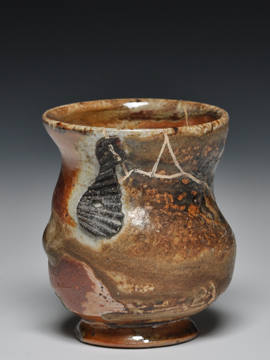
crackpot 1


I recently read Joni Eareckson’s book on the mysteries of suffering. 1

Comparing ourselves to clay pots, she stated that if we are meant to display the treasure that God put in each of us, then

“that display often works best when there are faults and cracks and chips in the pot! It is through these that the radiant, resplendent glory of Jesus shines through to the wondering eyes of the world.”

Joni has been a cracked pot for over 50 years, ever since the diving accident that left her a quadriplegic. Reading her quote, I reflected on how she’s an extreme example.  But how would the cracked pot comparison apply to all of us? Would it even apply to someone who is strong, vigorous, and healthy?

To check that out, I hunted for Scripture about crackpots.

 But we have this treasure in jars of clay to show that this all-surpassing power is from God and not from us. (2 Corinthians 4:7)

Here the apostle Paul implies that we would take the credit if we were overpowering and strong. But we are weak. Even the strongest of us gets exhausted if pushed hard enough. And, if we get old enough, it’s guaranteed that even the most strong, vigorous, and healthy of us will begin to show cracks in our own jar of clay!

Many of us have a special love for autonomy and independence. But look at what it says in Isaiah and Jeremiah:

And yet, Lord, you are our Father. We are the clay, and you are the potter. We are all formed by your hand. (Isaiah 64:8).

But the pot he was shaping from the clay was marred in his hands; so, the potter formed it into another pot, shaping it as seemed best to Him. (Jeremiah 18: 4)

Hey, wait a minute. These verses say that I was formed by his hand. And as seemed best to him. So, what does that imply about any complaint I have about how I was made?

Personal example: God gave me a slight frame instead of a mighty frame. As a young man this shaping was not according to the design that I would prefer. So how did I react?

Well, I discovered that my frame allowed me to outrun almost everyone on long distance runs. My attitude was: “I’ll show them! I’ll run them into the ground!” Only years later did I learn to develop a thankful heart to the Lord in my running, to see that God could take pleasure in me as I ran, and to use my influence amongst other runners instead of having a vicious need to run them into the ground.

Joni Eareckson has now reached this point: seeing how bountifully God has used her as she is, she would not trade her life as a quadriplegic for what her life would have been like had she remained able-bodied.

Even though few of us have a disability as extreme as Joni’s, each of us can view our weaknesses in a similar light.

Can you see how even your weakest parts can be used for God’s glory?


1    A Place of Healing: Wrestling with the Mysteries of Suffering, Pain, and God’s Sovereignty.  https://tinyurl.com/ybknk87m