Category: Devotions

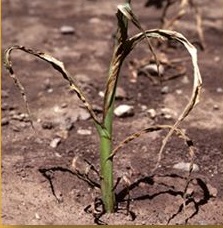
Fruit Even During Drought

dried in sun

“Some [seed] fell on rocky places, where it did not have much soil. It sprang up quickly, because the soil was shallow.  But when the sun came up, the plants were scorched, and they withered because they had no root” (Matthew 13:5-6)

“The seed falling on rocky ground refers to someone who hears the word and at once receives it with joy. But since they have no root, they last only a short time. When trouble or persecution comes because of the word, they quickly fall away.”  (Matthew 13:20-21)

We love to enjoy the wonderful privileges that come from being a Christian.  Our sins are forgiven!  We have eternal life! We have wonderful Christian friends! God is answering so many prayers!  We have such peace and joy!

But wait a minute. We still have struggles. Unanswered prayers.  Unhealed relationships. Bad stuff happens. Job loss. Sickness. Mockery and ridicule from family members who do not believe.

Our temptation is us to withdraw — from the Lord, from fellowship, from wanting to participate in what he is doing in his Kingdom. We fall away from craving more of him in our lives. In the face of the crappy stuff that is still going on, that threaten to dry out our love for the Lord, we need deepening roots……

The apostle Paul says:  “but we also glory in our sufferings, because we know that suffering produces perseverance; perseverance, character; and character, hope.”  (Romans 5:3b)

This deepening process is not easy and quick. I have known the Lord for decades and I still need deeper roots.  I thank God for his love which is so patient with us !

Jeremiah tells us the wonderful way that being rooted allows us to survive heat and drought in our lives:

“But blessed is the one who trusts in the Lord,
    whose confidence is in him.
 They will be like a tree planted by the water
    that sends out its roots by the stream.
It does not fear when heat comes;
    its leaves are always green.
It has no worries in a year of drought
    and never fails to bear fruit.” (Jeremiah 17:7-8)

Where are you feeling the heat ? May your confidence be in the Lord who promises to give you fruit even  during a time of drought.

Can You Handle the Truth ?

u_can__t_handle_the_truth_cat_by_vmanga-d3d1rjb

The Parable of the Sower Part 2

In the movie A Few Good Men, Kaffee said “I want the truth!” to which Jack Nicholson’s Jessup replied “You can’t handle the truth! “

Can you handle the truth? Today we explore the first of the four kinds of soil in the Parable of the Sower. Jesus starts by saying:

“A farmer went out to sow his seed. As he was scattering the seed, some fell along the path, and the birds came and ate it up.” (Matthew 13:3-4)

Later in the parable, Jesus explains the meaning of each kind of soil. In verse 19 he explains the seed that fell on the path by saying:

“When anyone hears the message about the kingdom and does not understand it, the evil one comes and snatches away what was sown in their heart. This is the seed sown along the path.”

Did this ever happen to you: You are listening to a powerful sermon…. You know that what you are hearing is true. And you say, “My friend sure needs to hear that one…”

But really…this message was a word of truth from God meant to challenge you…now!

Jesus says that the evil one comes and snatches that word of truth away. But can we just sit passively by and blame the devil? No! Scripture often exhorts us to handle the truth and not have a hard heart.

My wife and I live where there’s hard water. We need a water softener. When we don’t listen to the truth because our heart is hardened towards it, God provides heart softeners. God loves to soften our heart —–he will break up hard ground in our hearts if we ask. Check this Scripture out:

Break up your unplowed ground;
         for it is time to seek the Lord,
until he comes
         and showers his righteousness on you. (Hosea 10:12b)

As we often find in scripture, this verse shows a powerful combination of what we do and what God will do.

Lord, by your Holy Spirit show us how to turn from what is hard-hearted in our life and to your loving truth. Yes, with your power  we can handle the truth!

1. Cat picture courtesy of http://fav.me/d3d1rjb


The Parable of the Sower (Part 1) Introduction

Virginia Beach 2010 021

My wife and I visited Colonial Williamsburg a few years ago, and we saw a man dressed in colonial garb who walked through fields scattering seeds by throwing them into the air. Throwing the seeds in the air is called broadcasting. Since he wasn’t aiming the seed, it would land in various places—some more conducive to germinating and growing than others. As we watched him, we immediately thought of the Parable of the Sower.

Stating today, I’m presenting a series of five devotions based on that Parable. We’ll use the version of the parable recounted in Matthew 13. But, before we dive into the parable, let’s look at why Jesus even used parables in the first place. After hearing the Parable of the Sower, the befuddled  disciples came to him and asked “Why do you speak to the people in parables?”

Jesus replied by giving both an encouragement and a warning: “Whoever has will be given more, and they will have an abundance. Whoever does not have, even what they have will be taken from them.” (Matthew 13:12)

The parables are Jesus’ invitation to us to grow in the knowledge and experience of his kingdom. He told his original listeners: “For truly I tell you, many prophets and righteous people longed to see what you see but did not see it, and to hear what you hear but did not hear it.” (Matthew 13:17) So, we have an advantage that even the people who loved God the most in the Old Testament did not receive.

Do we welcome being poked by a parable? We’ll see how our answer should be yes, since Jesus says to those who are willing to listen: “But blessed are your eyes because they see, and your ears because they hear.” (Matthew 13:16).

But unfortunately, we face obstacles that may hinder our saying “Yes.” As we look at the sower in this series, we’ll be trying to overcome these obstacles, so we can turn to a life of being more fruitful in Jesus’ Kingdom.

Jesus’ parables never grow old. Meaning even if you are very familiar with a parable, you’ll learn something new when you study it again. So, I pray that this Sower series challenges and encourages you.

Does God Give us a Theology Exam?

pass exam

Sometimes I hear someone skeptical about Christianity asking: “What is the minimum you have to believe to be a Christian?”

I have a problem with that question. It assumes that becoming a Christian is simply assenting to a list of propositional truths or facts or dogmas. But this is a misunderstanding of what it means to believe.

Why? Because in the Bible “to believe” has a much deeper, wider meaning than just saying that a list of facts is true. To start, let’s look at what Jesus said to Martha about faith. The regular NIV translation says:

 Jesus said to her, “I am the resurrection and the life. The one who believes in me will live, even though they die; (John 11:25)

That translation gets part of the meaning. But the Amplified Bible expresses the full meaning of the original Greek word:
Whoever believes in (adheres to, trusts in, relies on) Me [as Savior] will live even if he dies

So, an effective way to rephrase the skeptic’s question is: Who do you need to trust to be a Christian? And the simple short answer is Jesus.

But then the next question is: Who is this Jesus that I trust?

John’s gospel is especially helpful here:
 but these have been written so that you may believe [with a deep, abiding trust] that Jesus is the Christ (the Messiah, the Anointed), the Son of God; and that by believing [and trusting in and relying on Him] you may have life in His name. (John 20:31AMP)

John’s whole Gospel explains why Jesus is worthy of deep, abiding trust. It explains who Jesus was, describes the miraculous things he did, expounds his commands to love, and shows how he gives eternal life to those who repent of their sins and trust him.

Taking all of this to heart, try to imagine what it would be like if you died and met God — would he give you a theology exam, asking “Which facts and propositions did you believe?”

Or would he say, “Did you live your life by fully relying on my Son Jesus?”